
Author: Byron Darden

Fight, Flight, or Freeze

At its essence, transitions are what allow us to simply walk.  We move one foot in front of the other every time we stroll somewhere. It could be from our bedroom to our bathroom. We move from breakfast to lunch. We go from home to work and back again at the end of the day.  Our work lives require us to work on one project and then move to the next. Or as many of us experience, working on more than one project at a time. 

We acknowledge how we behave and note that we can benefit from choosing new ways of behaving in the world to make living in it easier, more fruitful, and pleasing as an end game.

We are making these transitions every day, all day, and in several different aspects of living our lives. Most of them we give little thought to and yet, when the word change comes into our reality, we cringe. Some feel the sensations associated with the flight, fight, or freeze response to a perceived threat. 

Understanding these responses will help you work through them. In all three, your defenses are up and you anticipate a threat or sense of danger.  That danger could be the perceived change that affects your comfort level.

  • Fight – You are ready to stand your ground! You might feel intense emotions and a knot in your stomach, and you are prepared to fight the danger head-on.
  • Flight – You are restless, tense, and feel trapped. You are ready to head in the opposite direction. 
  • Freeze – You feel stuck in place.  Your heart is pounding and you may not know what action to take, so you end up not taking any.

When you feel one of these stress responses, it’s important to take a deep breath and consider what is happening.  Stepping back until you feel comfortable with the change or talking to a trusted advisor before making a final decision can prove helpful.

The flip side of responding to a decision by stepping back first is when you are faced with a decision that must be made now! Your option to weigh the pros and cons is short-changed. Think on your feet. 

Pushing Through Discomfort

I am in the business of change.  Anyone reading this article right now might be looking to make a change and are wondering how to do it effectively, efficiently, and with as little disruption to the current day-to-day as possible.  

Once we make whatever change seems the most necessary, we want to feel positive about the change and feel it is worth what it will take to sustain the change we have in mind.

Change is important for several reasons:

  • Change teaches us things about ourselves. It opens the doors to new possibilities.
  • Change enables us to adapt to new situations. It allows us to meet people and step into new environments.
  • Change allows us to look at things from a new perspective. These views may reinforce or challenge our life values.
  • Change gives us the strength to make it through tough times. It helps us put one foot in front of the other.  

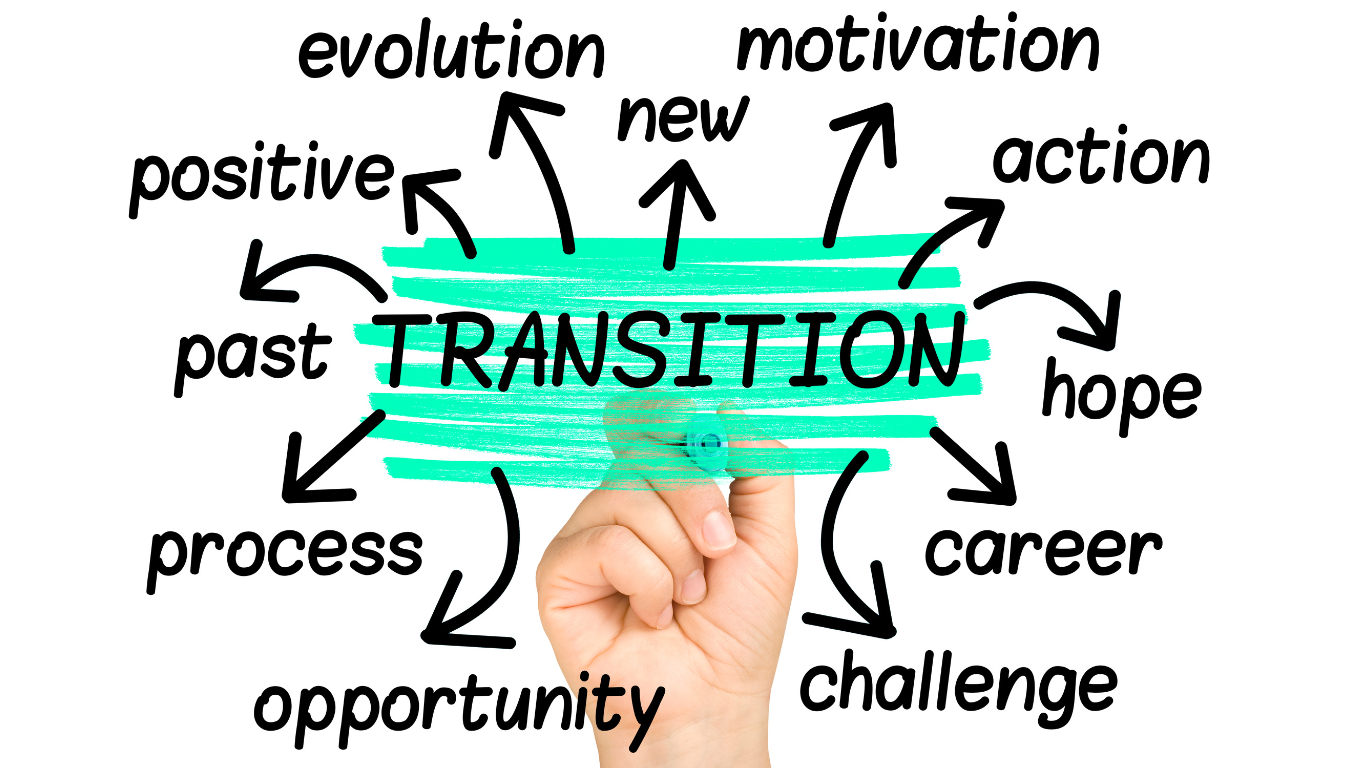
What most of us fail to realize is that in between the decision to change and the execution of the change is the art of the transition.  The smoother the transition, the easier the change.  When a transition becomes bumpy and disruptive, we feel off balance and would rather go back to the way we used to do it so the feeling of comfort returns. 

The challenge with that thinking is that we soon return to the feeling that got us thinking about making a change in the first place.

Transitions will take you on a roller coaster of emotions.  It’s important to step back and understand the why of the change and envision the future state after the change.  

Change Can Be Uncomfortable

There are numerous ways of looking at the concept of transitions.  It could be used in general to explain the process of someone moving, or being moved, from one set of services to another.  It could also encompass the adoption of a new look – such is the case for dress for success – or way of being – as we might adopt new behaviors and alternative mindsets.  

In the end, transition refers to the movement from a current state to a future state.  Whatever it is we are doing now, we plan to do it differently in the future, or possibly not at all.

What makes a transition most challenging is that it can be emotionally triggering to make a change. Most of us have a desire to stay in our comfort zone and most often that means staying the same…or so we believe! 

I have found that change is not really what haunts us the most.  It is that we have developed patterns that allow us to seemingly work on autopilot doing something repeatedly without thinking too much about it.  We are compared to machines that were designed to do just that.

We are not machines, we are living, breathing beings that need change to thrive and survive.

When burnout occurs due to monotony or high stress, ask yourself – “Has the lack of change contributed to the feeling?  Should you answer yes, then step out of your comfort zone and work through a transition. 

Working Through Transitions

Our lives pass through many phases.  We go from living with our parents to striking out on our own.  We graduate from grade school, then high school, then college.  We move from one job to another or from one department to another, climbing the corporate ladder.  Some of us marry and have children.  Some of us move to a different state or country. People come and go in our lives.  

All of these require going through transitions that we face over time.  We experience them at different times or rates of frequency and they all change us – one way or another.

This month begins our series on Transitions in the workplace and beyond – recognizing them, dealing with them, and thriving through them.

Founders Corner

https://youtu.be/IMcIZR7Zbjg

You’ve had your eye on a new role in your company and you want to do everything possible to prepare yourself to be the ideal candidate in the eyes of the decision-maker to ensure that you get the job. You study the requirements, comb through the job description, and confirm you’ve got what it takes to shine in this new position. You feel right for the opportunity. This will be a change for you – an event to go from one role to another. This is the ideal time to do something different that will challenge you in such a way that allows you to grow and develop your abilities. 

You also recognize there are a few skills you might want to develop to seal the deal. It could be highlighting your strengths in building relationships, or perhaps tweaking your ability to coach others given this new opportunity puts you in a leadership role. You may even find it helpful to develop your ability to effectively engage others on a team, while at the same time, impressing upper management that they can count on you to lead new lines of business. 

You might ask yourself, what will it take to enhance building relationships, coaching others, and engaging audiences of one to one hundred or even a thousand? What steps will you need to take? Which new techniques will aid you best? How will you go from being an individual contributor to developing others’ ability to contribute to business objectives and desired outcomes? The answers to those questions will serve as your transitions. 

Hi, I’m Byron Darden. Welcome to the start of our series on Transitions. I thought it fitting to start this series at the Gateway Arch here in Saint Louis, Missouri which physically illustrates the transition from one foundation to another. For those of you already familiar with my background in figure skating, you might have guessed that transitions are my specialty. 

Skating on ice is all about making transitions from one skate to another, from edge to edge, and often from one discipline in the sport to another. For over 40 years I’ve mastered transitions in the Olympic sport of figure skating. And for over 20 years I’ve applied that mastery to executives all over the world in honing their ability to become more effective leaders. 

I look forward to helping you make effective transitions in your career trajectory as well.

Bounce Back

“Resilience is all about being able to overcome the unexpected. Sustainability is about survival. The goal of resilience is to thrive.” – Jamais Cascio

History books are filled with those that overcame adversity.  Abraham Lincoln faced adversity from his very early career, failing as a shopkeeper, and failing to be elected to Congress several times.  Imagine if he had given up – instead, he became one of our greatest Presidents.  Colonel Sanders didn’t succeed with Kentucky Fried Chicken until he was in his late 60’s.  JK Rowling’s Harry Potter was rejected by 12 major publishers before becoming one of the bestselling book series of all time.  The list goes on. 

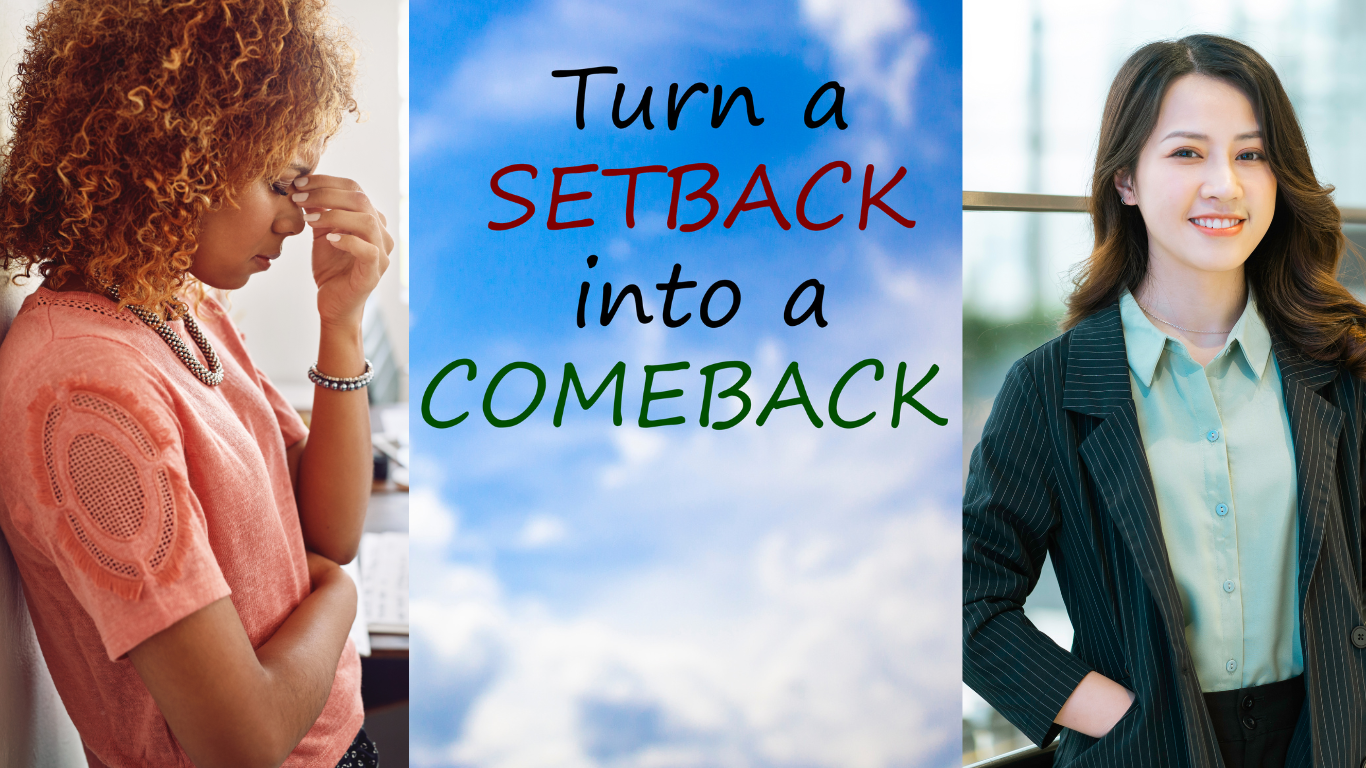
Whether your setback is small or seemingly insurmountable, people rarely remember the circumstances of the setback; they remember how you stood up, dusted the dirt off your knees, and made a plan. 

Are you facing a setback and need assistance working out the details – someone to bounce ideas off and gain perspective, book a call on my calendar.  Together we’ll work on tools to help you bounce back.

Handling Setbacks

Harvard Business Review looked at 450 CEO successions in 4 years.  35% of the CEOs who were ousted from one company proceeded to take a similar role at a larger company where they ended up being the same or more successful.  What is the difference between those who bounce back and those who do not?

Often it comes down to mindset and how the leader handles the setback.  Getting fired from a high-profile position can happen for a variety of reasons – some of which are out of the leader’s control.  Because they are at the top, they can be the fall guy or girl when times are tough.

After this happens, the leader has some choices – step down into a lower executive position, move into a lower-profile position out of the public eye (such as to the Board of Directors), or seek out a new company. 

When leaders have a well-constructed plan and follow the steps that we’ve mentioned above, they can fight back and convince others of their worthiness to lead again.  Other leaders choose a different path, albeit not at the top position.  Others are never heard from again.  The difference comes down to resilience and their plan to bounce back how they choose to. In the end, it always comes down to a choice.

From Fear to Triumph

I once worked with a client to develop storytelling techniques for use in business situations. Typically, these are stories with a teachable point of view. They are often told from the point of view of a life lesson learned. It could be a surprising insight gained from an otherwise unflattering light shown on the storytellers themselves, or perhaps a learning we have from watching the failure of another person’s actions.

They were petrified at the thought of standing before colleagues, sharing a less than proud moment from their lives. At the encouragement of the cohort with whom they were aligned, the moment came to stand in front of a classroom of high-powered executives and share the story they crafted over the course of an afternoon.

When the story reached its end, their fellow executives from all over the world, representing a wide variety of different industries, rose to their feet with the precision of the Rockets at Radio City Music Hall applauding that seemed to go on for some time. In all the years I’ve taught this program, I do not recall experiencing such a heartwarming appreciation for a story well told. The lesson learned is that we can be our own worst critic and when we simply trust in the process, something wonderful can emerge. In addition, we also grow in confidence the more we do the things that challenge us the most. Each building block that contributes to our courage makes us stronger and more willing to tackle the next.

It isn’t from theory that I draw lessons to help leaders overcome hurdles in their careers. It is from being in the trenches and learning from doing that comforts me in lifting others up.

Self-Reflection

When something fails to work out as expected – leaving us with a negative outcome, it’s learned behavior to react by pointing the finger at someone or something. While there may be outside influences that contribute to the issue, the one thing that you can control is your choice of response. Effective leaders take ownership of their part of the problem, learn from setbacks, and create opportunities for improvement.  It’s important to keep things in perspective and consult your team for solutions. 

Developing your resilience soft skills involves self-reflection.  Take time to reflect on the situation, brainstorm possible solutions, and determine your next steps.

  1. Setbacks are often unexpected – or at least they seem that way.  Give yourself time to reflect on the situation.  This often results in the “Why me?” or “Life is unfair” inner criticism we fall prey to at times. Just avoid remaining in this state for too long.
  2. After some reflection, you might realize that there are things you could have done differently.  Identify the buttons that were pushed and your shortcomings in averting the situation.
  3. In many situations, there are elements out of your control and those that you can control.  Realize the difference and capitalize on what you learn.
  4. Make a plan moving forward and be prepared to work on your plan.
  5. Give yourself grace.  Setbacks happen to everyone and how you handle them will define you.
  6. While it’s tempting to blame outside circumstances, you gain more by looking at the situation from different perspectives.  Remember that when you point a finger at others, three fingers are pointing back at you.
  7. Throughout the process, stop and reflect on choices you make or decisions that led to the current unsatisfying situation. 
  8. Resolve to learn from the setback and recognize how you can choose differently in the future.

When Things Get Tough

Resilience is the ability to bounce back with ease from whatever might throw you off balance unexpectedly. In leadership, this can happen in any number of ways too numerous to count, and it can happen on a routine basis.

  • Did the coffee shop screw up your latte again?
  • Did the client change their requirements?
  • Did you miss out on getting the promotion you deserved?
  • Did you get laid off or fired?

Resilience is one of the table stakes of becoming an effective leader. One thing to remind ourselves of is that no matter how skilled you are, remaining grounded when losing your balance as a leader is as much a part of the role as regaining your footing when you find yourself careening into a tailspin; something pilots must learn how to overcome before getting their wings to fly.

No matter what your situation, the next step after the setback defines your leadership resiliency.

We see this displayed in the news. A company faces a situation that causes its stock to plummet, or its image to falter in the consumer’s eyes. This could be due to a natural disaster, past business decisions that are now questioned by employees or the public, or a myriad of other events.

The resilient CEO gets up in front of their employees and explains the situation and how the company plans to mediate the damage or bounce back. The stronger the relationship is between leaders and their followers, the greater possibility for overcoming setbacks.