
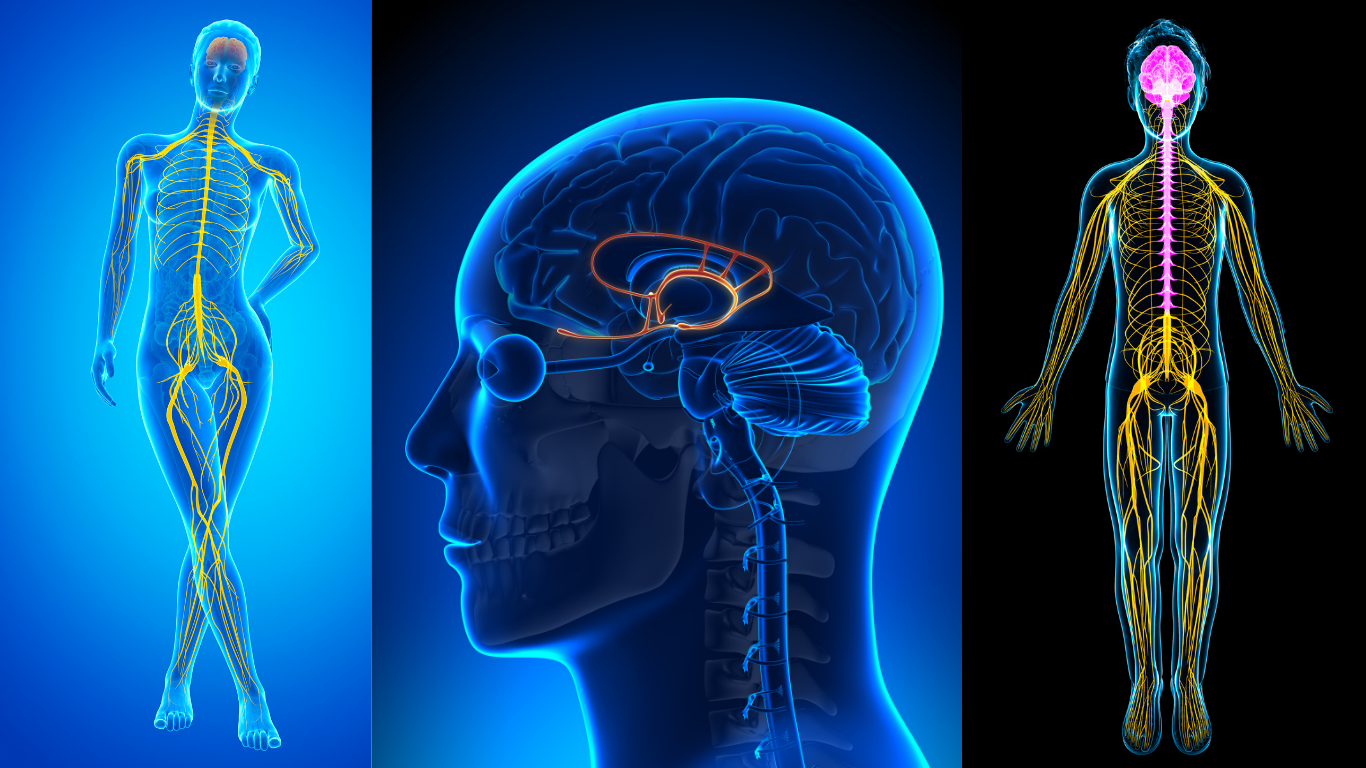
The vagus nervous system, shown at either end above, appears as branches of a tree throughout the body and is connected to the amygdala as shown in the center image.
What was once considered a simple relaxation technique is now supported by a growing body of neuroscience.
Controlled breathing stimulates the vagus nerve, one of the most important communication pathways between the brain and the body. Activation of this nerve helps regulate heart rate, digestion, and emotional responses.
Research from Stanford University’s neuroscience laboratories has shown that breathing patterns are closely linked to activity in brain regions responsible for alertness and emotional regulation.
When breathing slows and deepens, activity in the amygdala—the brain’s threat detection center—begins to decrease. At the same time, the prefrontal cortex, which governs reasoning, planning, and decision-making, becomes more engaged.
In other words, the way you breathe directly influences the part of your brain responsible for leadership-level thinking.
This is one of the reasons I developed a meditation practice early in life while training as a competitive skater. Performing under pressure required a level of grounded focus that could not be left to chance.
Breathing became the anchor that allowed that focus to emerge consistently.