
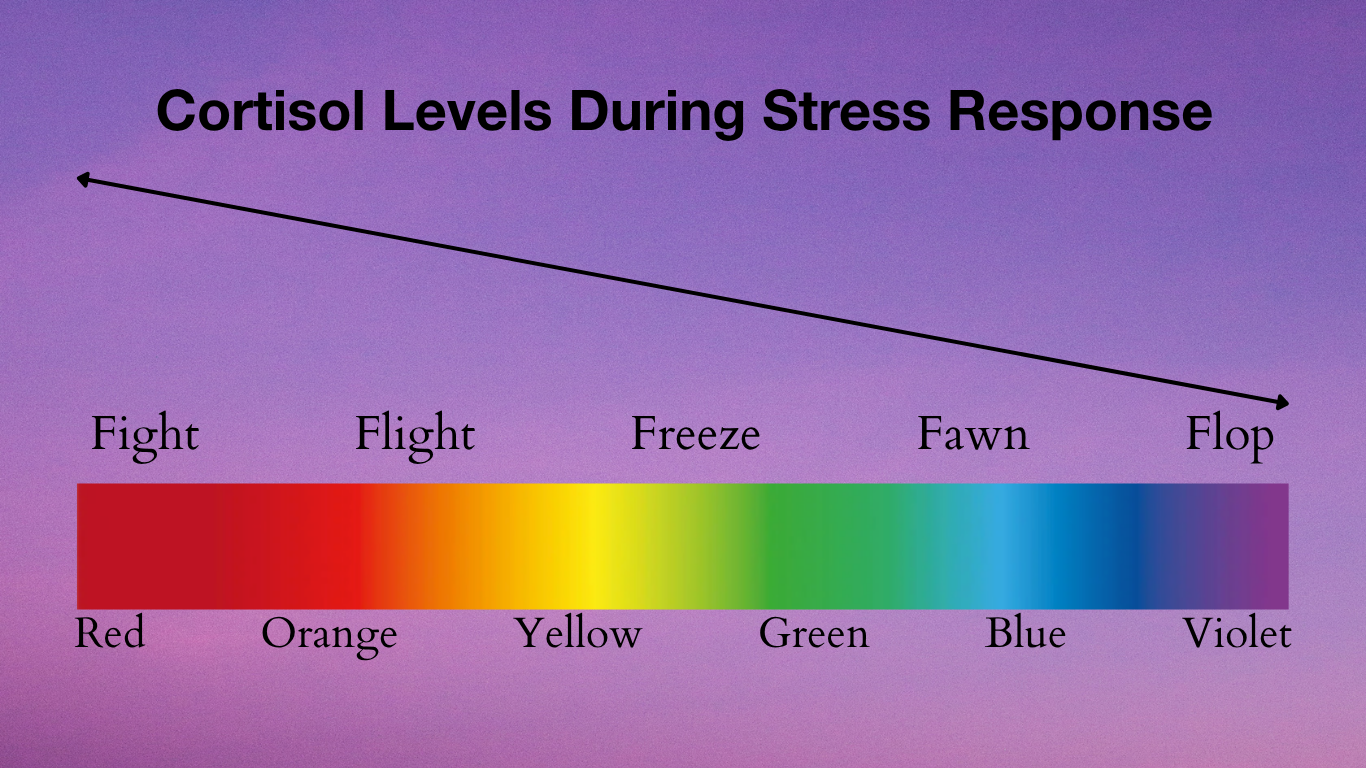
Illustration of how cortisol levels decrease when the body is not under attack.
Leadership roles expose individuals to a steady stream of uncertainty, time pressure, and competing demands. Over time, this constant stimulation activates the body’s stress response system.
The challenge is that the human body cannot easily distinguish between a real physical threat and the psychological pressures of modern professional life. Both trigger the same biological reaction—often described as the fight-or-flight response.
To avoid oversimplifying, this reaction actually exists across a broader spectrum that includes fight, flight, freeze, fawn, and even flop responses.
These reactions increase heart rate, elevate cortisol levels, and prepare the body for immediate action.
In true emergencies, this response is lifesaving. In daily leadership environments, however, remaining in this heightened state for long periods can impair decision-making, shorten patience, and increase emotional reactivity.
Over time, it also places strain on physical health.
Intentional breathing offers leaders a direct way to interrupt this cycle.
By slowing the breath—particularly by extending the exhale—you activate the parasympathetic nervous system, which helps the body shift from a reactive state back into balance.
For leaders, this shift translates into practical advantages:
- clearer thinking during stressful moments
- greater patience in difficult conversations
- improved listening and judgment
- decisions made from clarity rather than urgency
In essence, intentional breathing strengthens self-regulation, which is one of the most foundational capabilities in effective leadership.